
May 22nd Neurospicy Founders Group Coaching Session: The Messy Middle of Founder Transition
On May 22nd, I did a group coaching session for Neurospicy Founders about transitions. The inspiration for this article comes directly from that experience I had with the eight founders in the group and is a consolidation of my knowledge and experience with this topic in coaching sessions neurodivergent and neurotypical clients alike. Honestly, it’s a big topic and I would have liked to do it more justice than I could in our 90-minute session! So, I’m expanding on the idea here and sharing a structure to help you map and navigate your own season of flux.
Change, Transitions & Identity
Change is inevitable. Oftentimes a change happens suddenly, faster than external circumstances or your physiology can catch up with. That’s when you enter the transition phase, a state of liminality that accompanies a change. An identity shift accompanies any transition, and during most transitions there is a liminal phase, where the old identity no longer fully exists in its old form in solidity, and the new identity has yet to be formed.
Transitions can look like moving:
In your work and career:
From founder to CEO, from individual contributor to people leader.
From a position in the corporate world to being self-employed.
From being a solo entrepreneur to a cofounder.
From being a cofounder to breaking up with a cofounder and becoming a solo founder once again.
To exiting and founding again.
From being a business owner into an employee position.
From performing quite competently and excellently in one culture to banging your head against the wall in another.
In your personal life and relationships:
From being perpetually single to being in a life partnership of some kind.
From being married to being single.
To becoming a parent.
To caring for aging parents in a role reversal.
From leaving a toxic family dynamic and creating a chosen one.
All of these are transitions, and they are not even a comprehensive list of ones that I’ve coached people through. They all involve some degree of liminality, a threshold period.
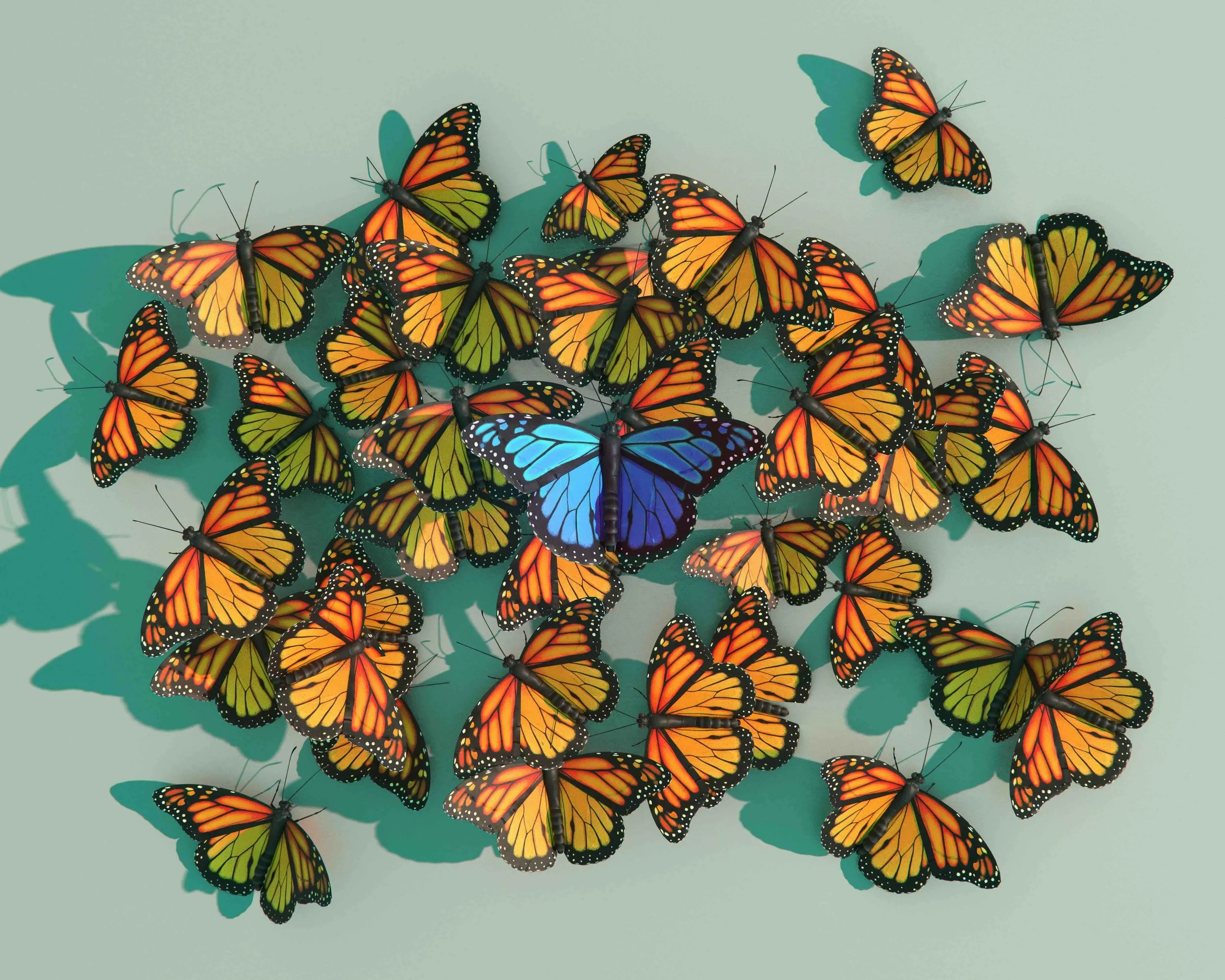
Liminality is beautiful and can be disorienting and lonely.
This threshold of liminality can be narrow or wide and take varying amounts of time to traverse, depending on an interaction of openness, life experience and values, support systems, access to guidance, depth or suddenness of change, neurological wiring, type of change, and whether there was agency involved or the change was involuntary. I wrote about traumatic transitions in my short article about speaking at the WELL Conference in March 2025, where I shared my system for the ingredients necessary for intentional post-traumatic growth. From the seeds of that particular part of my work, I’ve grown and nurtured a transition framework that I use for individuals, groups, and organizations (and of course, myself).
Transition Mapping: How to place, care for yourself and leverage your growth in a major transition
Before I get into the mapping itself, a few important points to consider.
Transitions can feel endless, but they’re not. And for many of us, there are discernible stages. I’ve created a structure to help with mapping your transition, based on my studies and research, thousands of hours of coaching all kinds of people through a wild variety of transitions, and my own experience as a highly liminal human.
And structures have limits. We all bring huge individual differences to how we go through change, a reality that is especially true for neurodivergent minds, whose nervous systems often process sensory, emotional, and executive function shifts with unique intensity. Some of us crave it. Some of us hate it. Some changes are chosen, intentional. And some are forced and we take on a transition that we didn’t ask for. Some of us are going through a single transition, and many of us are going through multiple transitions in different stages simultaneously.
So what I’m saying here is that, it’s fuzzy. And there are moments when we oscillate between stages. And, the framework works best when paired with the assumption that you have skills and tooling, emotional and professional support networks, and professional guidance. So, my recommendations at each stage may also require you to access, build, or invest in those things.
A note on identity
For clarity and to avoid overwhelm, I refer to the new role, project, venture, or self as an identity. This is because you cannot separate a role transition from an identity transition. Any true transition requires you to expand beyond who you are now to include who you’re becoming. So remember, your new identity actually includes a synthesis of the multitudes of who you were before. This is what I mean when I refer to a singular “identity” in the following stages.
Stage 1: Still running
What it looks like:
In this phase, your body hasn’t caught up with the change. You’re still operating under the old identity, even though the external circumstances have changed. This can look like compulsive doing, scanning for the next thing, tension in the body and pain as it resists the change.
How to navigate it:
The thing you need here is time. Do breathing exercises to help soften the tension, transition to lower-impact forms of exercise like walking, yoga, or gentle swimming. Talk to trusted guides and close community members about what you’re going through, and take it easy with yourself as you move in and out of this stage and the following one.
Stage 2: Dissolution
What it looks like:
In this phase, your body and mental state have begun to realize that your old identity no longer exists in the secure way that it used to. While parts of who you were always remain, the overarching structure is breaking down, bringing heaviness, collapse, grief, and exhaustion. If burnout has been a part of your transition, this is where the sheer physical exhaustion can hit and it can feel difficult to do anything at all.
How to navigate it:
Rest. Self-compassion, and the perspective that with care and time things will improve, and people around you to hold that perspective for you when you can’t. This can be a painful phase and resisting it can make it worse. At the same time, it’s important that you have trusted guides, partners and friends who are non-judgmental and caring, who can support you to strike the balance between taking the time you need and also avoiding a depression spiral, and who can help you get out if you fall into one.
Stage 3: Imaginal
What it looks like:
This is the hardest stage for most of us, and also the richest. Basically, we have to dissolve and remain gooey for a bit for our new form to emerge.
Energy begins returning, but may feel unstable, intermittent. You have an inkling of what the next thing might be, but still nothing solid is forthcoming, which can be frustrating. At times you still feel heavy, physically and emotionally, and at others you feel light and joyful. The spikes of energy can feel misleading, like you should have it figured out but aren’t quite there yet.
How to navigate it:
Keep resting. Keep relying on those relationships where you can be authentic. Now, when you have the energy and motivation for it, add some intentional play into the mix. Your sparks are impulses that just might lead you to the next thing if you take time and have patience with them, and don’t attach too much pressure to have them be productive. Experiment with those glimmers of clarity.
Think you might be more fulfilled if your next professional identity is something creative? Create a tiny experiment in adding more creativity into your life. Join an art meetup, take up sketching in your private moments, spend more time doing karaoke. Without criticism, observe how playing and experimentation inspire you, and how they show up as physical shifts in your body sensations. Be patient with yourself, you’re not broken, you’re reforming.
Stage 4: Signals
What it looks like:
Play becomes easier. Flow occurs more often without effort. Those sparks from Stage 3 start to repeat. They’re small and quiet at first, and might be dismissed as too quiet or weird to count. When you approach them with an open, “what if” attitude, they grow, clarify, solidify. They begin to become actionable, problems you can solve, useful and concrete things you can create. In the body, it can feel more open and light, less tense and more smooth flow of energy. Sleep might improve, and emotions become slightly more stable.
How to navigate it:
As your new state begins to emerge, try it out in new relationships and contexts. As you begin to see yourself more clearly, connect with other people who have similar identities, and begin to playfully introduce yourself with the new labels, to see how they feel for you and to gauge whether your existing relationships can hold the new version of you or whether they need to be adjusted. Some relationships and activities will fall away as they are replaced by ones that are more in line with the newer version of you. Make sure you make the space and time to transition those as well—that can be the most painful part of this stage, riding right along with the genuine excitement about who you’re becoming.
Stage 5: Emergent form
What it looks like:
Your identity is still a bit gooey, but mostly solid. This appears as more emotional stability and physical energy, and more ease of concentration. Tension is mostly dissipated as your physiology has caught up with the new state of things. The multitude of signals that you experienced narrow down to a few, more focused ones. You can clearly map where you were, where you are now and how you got there, and have a better idea of where to go from here.
How to navigate it:
This is the time for building, roadmapping, setting goals for yourself. Lean on your accountability structures to keep going. As with each stage, this is a great time to practice gratitude for everything that’s present in your life, what you’ve created and the positive and supportive relationships around you. Where you are now is where a previous version of yourself wanted to be. Take the time to appreciate this before jumping immediately into wanting something else. You will go through all of these stages again in the next transition, and the next, so take the time to really soak this one in, while it lasts!
Liminality as a skill
You’ll hear this often these days, that we live in an age where there is a high degree of Volatility, Uncertainty, Complexity, and Ambiguity (VUCA). And in the age of ubiquitous LLMs and AI fatigue we’re experiencing chronic overwhelm at an unprecedented pace. Our nervous systems aren’t really built for the levels of VUCA that we’re experiencing, for the level of output we’re expected to produce, they’re built for a much simpler operating mode. Threat, or connection. It’s always been true that each one of us is a bundle of complexity moving within layers that grow increasingly intricate as you move from micro to macro. When life and work moved slower it was easier to ignore that, but now the messaging we’re receiving is clear. Move faster or lose your raison d’être. For better or worse, liminality is a constant state for many of us who are doing knowledge work now, and it’s something that we can learn to be good at. And, while it can be stressful, the more we’re able to exist in liminality the more we can learn to explore and experience the fruits that it has to offer. The key is finding stability and groundedness in the flux.
My motto is, whatever transition is happening, whether chosen or not, can be reframed as an opportunity for growth, depth, and discovery. We don’t always have control, but we always have choice, even if that choice is limited to how we think about what’s happening. I don’t want to waste any experience that I’m privileged to have, even the difficult ones. And I’m passionate about helping others make good use of those experiences as well.
Navigating your own flux? If you are currently anywhere between "Still Running" and "Emergent Form" and want a trusted partner to help you find stability in the middle of it all, I’ve got a couple of open 1:1 coaching spaces open and a variety of options to support you. Book your first session here.
